Why Your Back Feels "Stuck" After a Day at the Desk (And how to actually fix it)
At The Mindful Yoga Collective (MYC), we see a consistent pattern among the professionals we support across Sydney, Brisbane, and beyond. It’s that familiar, concrete-like stiffness in the lower back that hits right around 3:00 PM.
As a team led by Physiotherapists, we look at this through a clinical lens. Most back pain in the corporate world isn't about "weakness" - it's a mechanical response to static loading.
The Science of the "8-Hour Squeeze"
Think of your spinal discs like small, fluid-filled sponges. When you stand and move, those sponges stay hydrated. But when you sit for hours (especially when leaning toward a screen), you are essentially squeezing the fluid out of them.
Clinical research calls this tissue creep. Data shows that prolonged sitting significantly increases intradiscal pressure compared to standing. This is why you feel "stuck" when you finally stand up; your spine is physically struggling to find its shape again.
The Psoas Tug-of-War
Your Psoas (deep hip flexor) connects your legs directly to your lower spine. Chronic sitting keeps this muscle in a shortened state. Research into sitting and hip morphology suggests this constant tension can lead to significant discomfort and altered movement patterns, literally pulling on your lumbar vertebrae all day.
The MYC Method: 3 Clinical Resets
Our approach at MYC isn't about traditional "stretching." We use evidence-based movement to give your nervous system a different input. Here are three resets our clinical team prescribes:
1. Segmental Spinal Mobilisation
Instead of flopping through a "Cat-Cow," try to move like a slow-motion wave, one vertebra at a time.
The Evidence: Controlled spinal movement has been shown to improve fluid transport in the discs, helping them stay resilient.
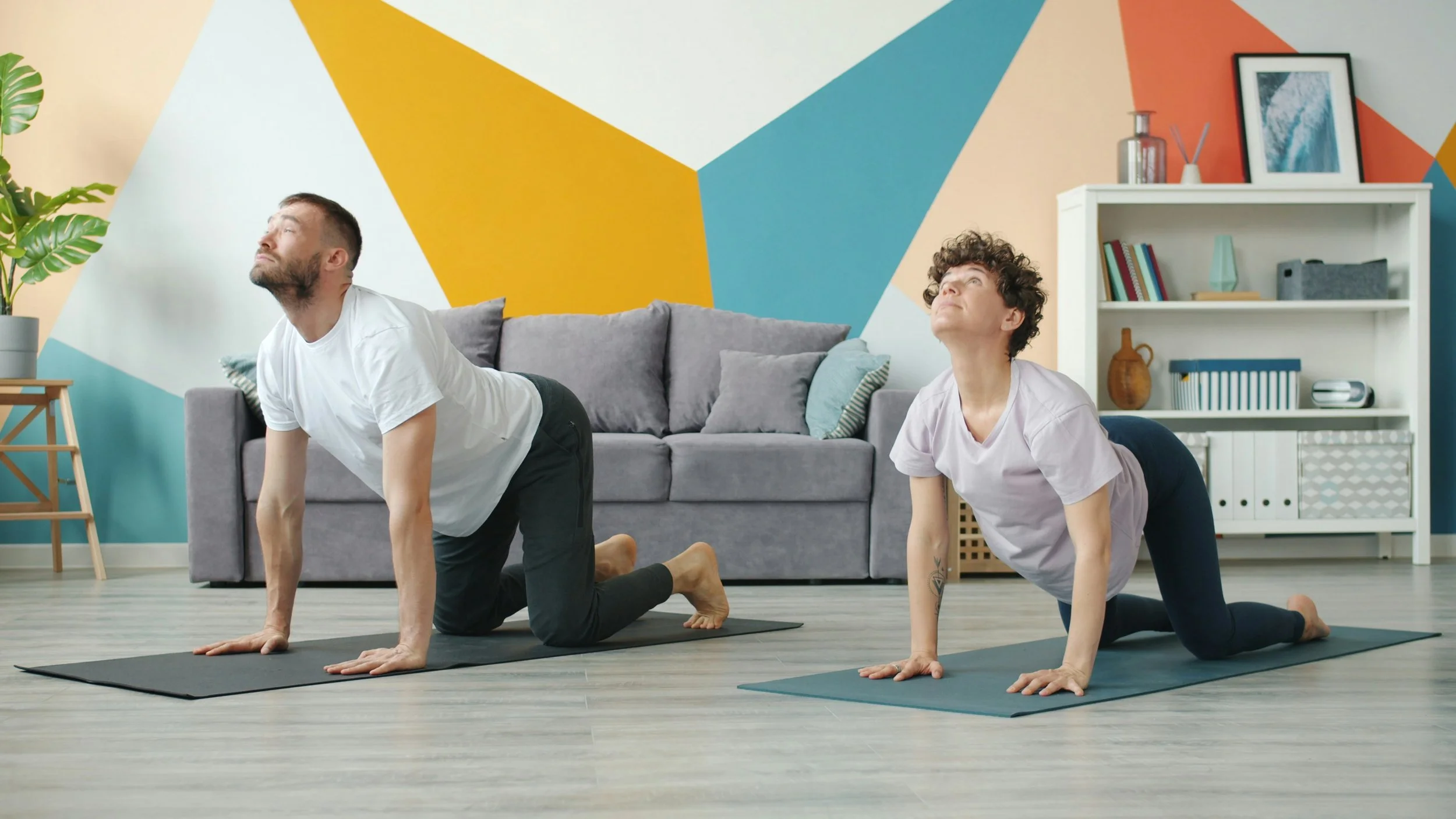
Photo by Vitaly Gariev on Unsplash
2. The "Tuck and Squeeze" Lunge
Take a small lunge, tuck your tailbone under, and squeeze the glute of your back leg.
The Evidence: This utilises Reciprocal Inhibition. When you engage the glute, the nervous system sends a reflexive signal for the opposing hip flexor to relax.

3. The Bird-Dog (Stability Drill)
On all fours, reach one arm forward and the opposite leg back. Think about "length" rather than height.
The Evidence: This is a gold-standard exercise because it stabilises the spine without creating high compressive loads on the discs.
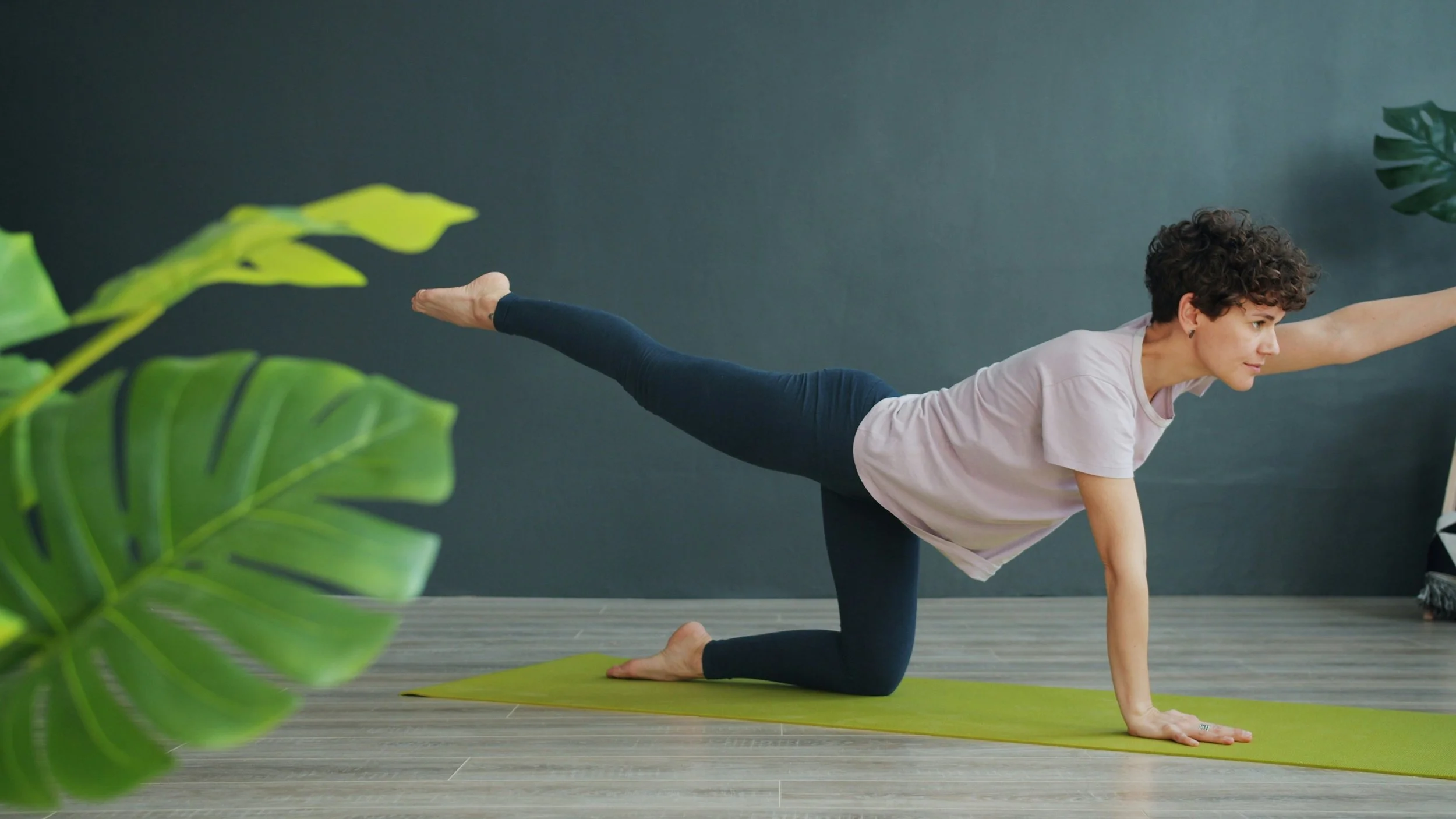
Photo by Vitaly Gariev on Unsplash
Expert Support, Anywhere: Virtual & Telehealth
At The Mindful Yoga Collective, we believe geography shouldn't dictate your access to clinical wellness. While our teams provide in-person corporate programs in Sydney and Brisbane, we specialize in bridging the gap through our digital platform.
Virtual Corporate Wellness: We beam high-definition, Physio-led sessions directly into boardrooms and home offices nationwide, ensuring your remote team stays as healthy as those in the office.
Telehealth Consultations: If you have a specific injury or persistent "niggle," our Physiotherapists offer 1-on-1 Telehealth consults. We use video analysis to assess your movement and provide a tailored digital rehab plan you can do right at your desk.
Yoga is a powerful tool, but yoga backed by clinical exercise science is a long-term solution.
Ready to move better? Whether you’re looking for a corporate program for your Sydney office or a private Telehealth session from the comfort of your home, the MYC team is here to help.
